
The Park History
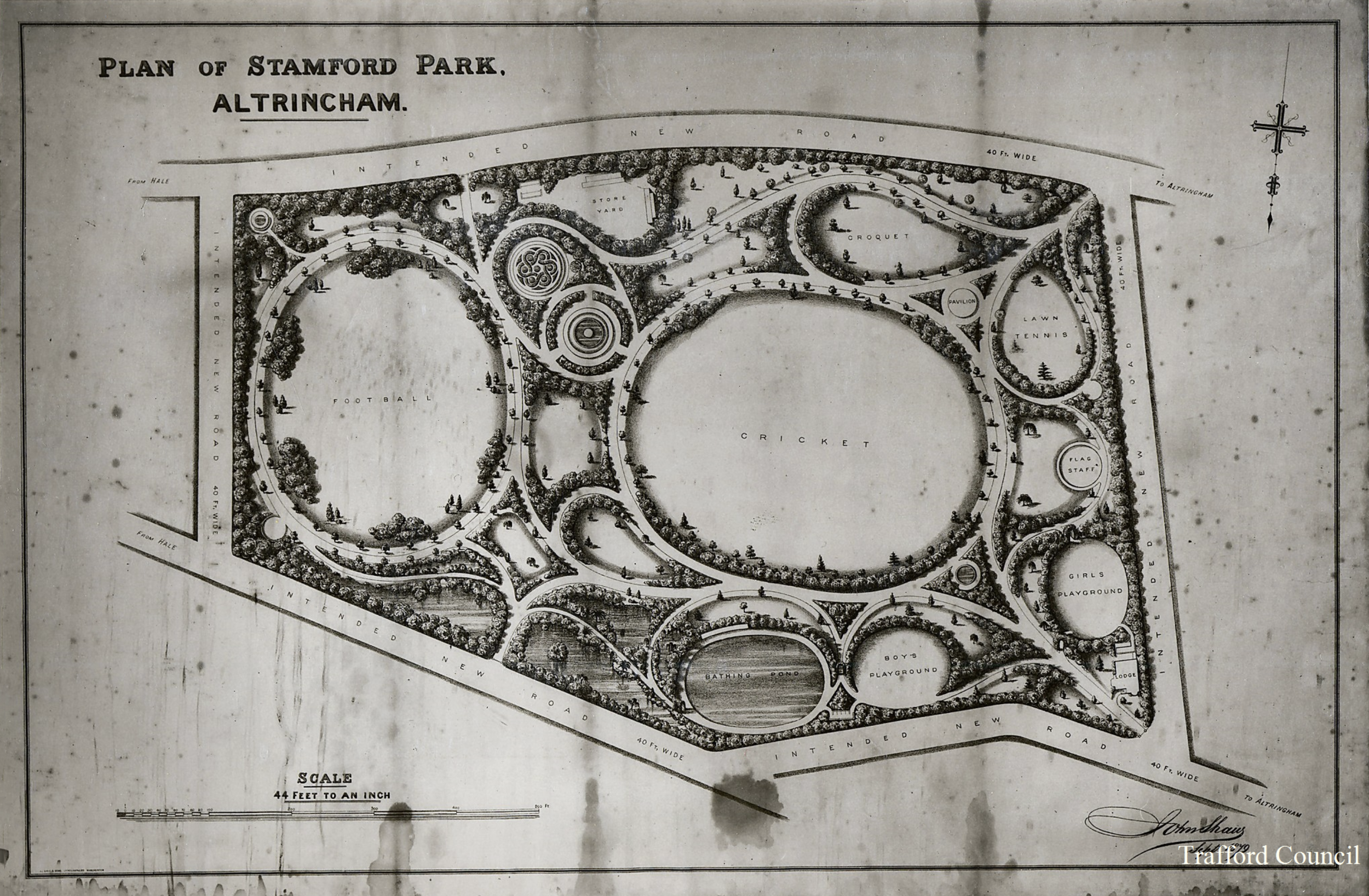
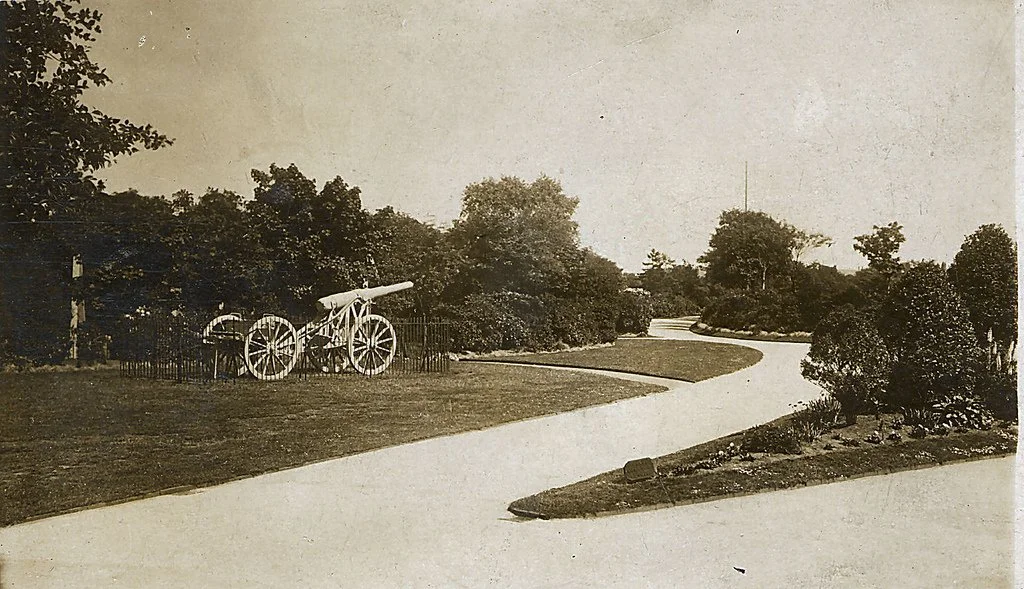
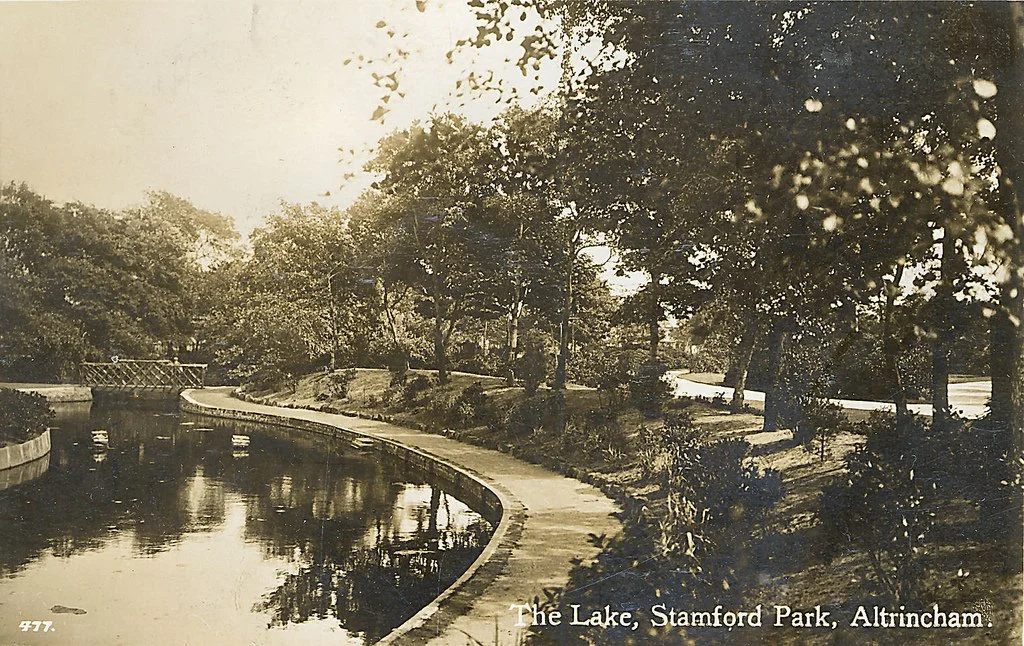
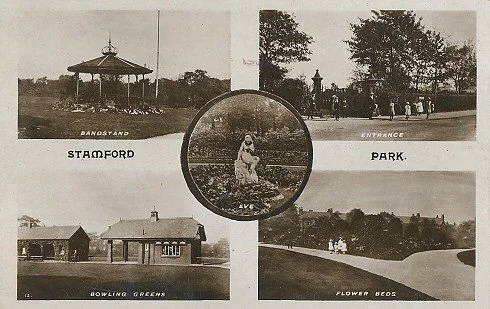
Thank you very much to Trafford Local Studies for allowing us to use these photos. They show areas of the park you’ll maybe recognise, from around the early 1900s. Also shown is one of the original plans of the park.
If you have any old photos of the park, we’d love to see them!
Stamford Park is a 16-acre public park owned and managed by Trafford Council. It is one of the most heavily used parks in Trafford and lies on the borders of Altrincham & Hale.
It opened in 1880 on land donated by the 7th Earl of Stamford and was designed by John Shaw. In recognition of its position as one of the first public parks designed for sports, it has a Grade II listing on the Register of Parks and Gardens of Special Historic Interest (England).
In 2025, Stamford Park was awarded its first ever Green Flag. FoSP are proud of this achievement, which has only been made possible with the support of Trafford Council and Amey.
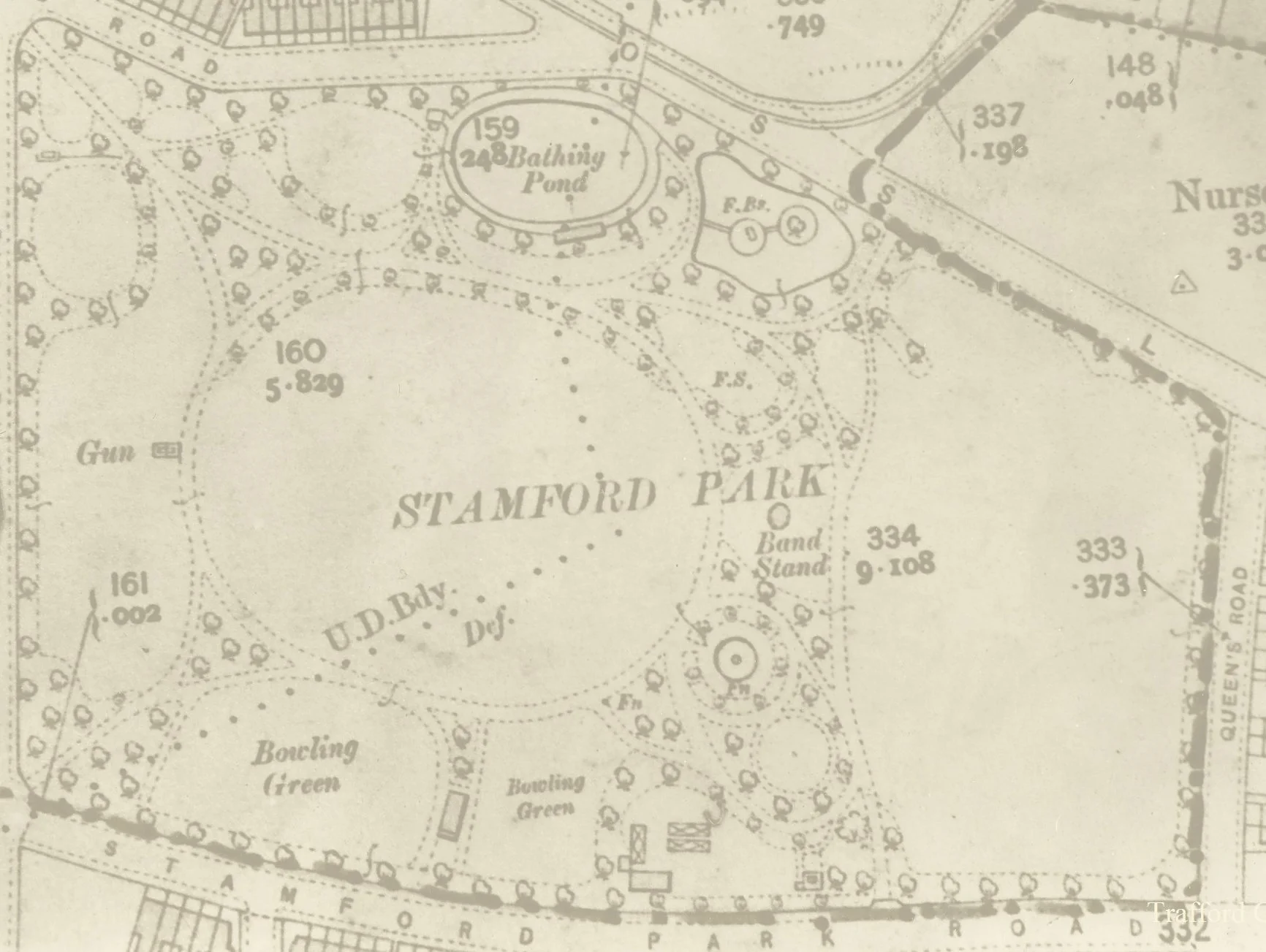
A late-Victorian/Edwardian large-scale OS map believed to be the 1897 OS map (2nd edition, published in 1898)
Establishment of Stamford Park (1878 - 1880)
The need for a recreation ground on Hale Moss was first proposed in 1866.
In 1878, the Earl of Stamford offered about eight acres for a public park and recreation ground.
The offer was increased to sixteen acres the following year.
The park was laid out by landscape gardener John Shaw Junior to the designs of his father, John Shaw Senior.
Stamford Park was opened on October 23, 1880, by Joseph Gaskarth, Chairman of the Local Board.
The gift of the park was generally received as a final settlement of any public claims to the Moss.
Grade II Listed Status: In March 2001, English Heritage included Stamford Park in the Register of Parks and Gardens of Special Historic Interest in England, and it now has Grade II listed status.
Final Settlements and Modern Land Use (1894 - present)
Financial and sanitary difficulties continued, leading to further land agreements in the early 20th century.
In 1894, the Stamford Trustees fenced in their land to discourage tipping, causing a public outcry.
In 1901, Hale Urban District Council (UDC) agreed to buy three acres and to lease what is now Hale Bowling Green for public purposes.
In 1902, in final settlement of commoners’ rights, the Stamford Trustees sold:
Pollitt’s Field to Altrincham Council (subsequently used by Altrincham Football Club).
Ten acres on the north side of Moss Lane to Hale UDC, which became the
Altrincham Football Club ground in 1910.
The former clay pit known as Dean's Pond still exists as King George’s Pool.
Allotments were set up during the 1914–1918 war and are still there, with adjacent
reed beds replanted in 2003.
The Gas Works continued operations after moving to the site in 1847.
Gypsy and Traveller Communities on Hale Moss
Up to about 1900, Gypsy and Traveller communities used to camp in the area.
Nineteenth-century census returns contain entries for a caravan and a tent on the Moss.
Leaders included Charles and Emperor Boss.
By 1913, Emperor Boss had abandoned the open-air life and was living in Hale as a furniture remover and firewood dealer.
Abridged History: Hale Moss and Stamford Park (post 1845)
The Historic Water Channel and Water Rights
Hale Moss, a floodplain of the Timperley Brook, was the source of a significant early watercourse. In 1621, a channel was cut from the moss down what is now Oakfield Road and Grosvenor Road to power mills in the Derby Street area. This channel was extended even further the following year.
In 1622, Sir George Booth extended the channel another three miles to Dunham. The purpose was to help fill the moat there and power the seventeenth-century mill, which still stands near Dunham Hall. The channel's importance was underscored in the early 1760s, when the Duchess of Stamford negotiated the preservation of all water rights on behalf of local landowners during the Duke of Bridgewater's efforts to build the Bridgewater Canal.
All that remains visible in the Hale area is the flow out of the Stamford Park pond.
The Enclosure of Hale Moss and Disputes
Lord Stamford owned Hale Moss. It was historically a source of fuel and common grazing land.
In the first half of the nineteenth century, two large clay pits were dug for brick making, which became Gibbons’ Pond (now a football field) and Dean’s Pond, which still exists as King George’s Pool.
The area was subject to a major dispute in the second half of the nineteenth century when the land was enclosed for health and safety reasons.
The Earl of Stamford applied for enclosure under the ‘1845 Inclosure Act’.
A public inquiry was held in 1862. About forty people claimed commonable rights, probably many of them from Gypsy and Traveller communities. Only one person, a Mr. Barratt, could substantiate his claim.
The Earl then sold off building plots.
The Moss was often used to tip rubbish (including carcasses and fishmongers’ offal), causing public health problems.
The Gas Company was set up in 1846 and moved to Hale Moss in 1847.
